Who protests the most around the world?
“We can change the world and make it a better place. It is in our hands to make a difference.”
– Nelson Mandela
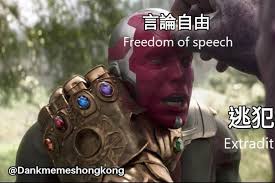
University students do or should i say student power? The recent protests and involvement of university students made me curious about why university students are in the front line of social movements. They are just young adults who aren’t fully integrated into the society or its workforce so what drives them? What is at stake for them? What do they get by risking their future and how did they get involved? Why do they participate in this? Most importantly, why are these young adults the face of social movements instead of working adults? Many student leaders have been arrested over the years in Hong Kong yet the heat of movements haven’t stopped.

What drives these young adults? What extents are they willing to go to? According to an article by Helen Regan for CNN (2019), titled “Hong Kong’s student protesters are turning campuses into fortresses” university students turned their universities into protest camps with stockpiles of weapons and food. the students were prepared for a long time of protest. they have put their own safety, their own education, Hong Kong’s economy into risk to get their voices heard by the government. What drives such a large group of university students to take severe measures and turn violent? Threats to their academic freedom, speech freedom made them take these steps and occupy universities. They want to protect the freedom of speech, freedom of assembly. “FREEDOM” is most important of the newer generations, they are willing to everything in their might to protect it, some unfortunately give in their lives too. The students are very professional at what they do and are at a high level of coordination, as the articles states.

It’ll be wrong to say traditionally students were more ‘decent’ and focused more on looking for a career than fighting for justice. Student activists have been speaking up for ages, from riots over butter to rallies over tuition rises. In truth, campus activism has had a significant impact on the development of higher education. Students have advocated for institutions to abolish discriminatory rules, improve campus safety, and improve student life for generations. “Universities were functioning like well-oiled socialization machines,” with the purpose of producing the appropriate individual for the right job, but then something occurred, and uprisings arose. As explained by Salter(1973) Everything from the rising Vietnam War to the absence of civil rights for people of colour, to the demand for Black and multicultural studies on college campuses, happened in the 1960s. University students involvement in protests have come a long way. As a fellow university student myself, I know how much students relate and get involved in movements. There are so many examples and history that relates to university students protesting and could help me achieve sufficient sources on this topic.
Nowadays, protests and social movements are not just occurring on streets or done offline. Rather the social media era has given movements a new transformation., For mass protests, digital media has permitted a new type of communication infrastructure. Social media, according to Valenzuela (2013), are linked to social movements in three primary ways: information sharing, political expression, and mobilization.
There are so many ongoing social media riots and clashes that I want to work on and find out if my classmates are as involved and interested in these topics as I am. by working on this topic, I could ease my curiosity and learn more about the motives of university students regarding such topics.


References:
Helen Regan CNN November 16 (2019) https://edition.cnn.com/2019/11/15/asia/hong-kong-protest-university-fortress-intl-hnk/index.html
Salter, Brian. 1973. “Explanations of Student Unrest: An Exercise in Devaluation.” British Journal of Sociology 24(3):329-340
Tarrow, S. (1998). Power in movement (2nd ed.). New York, NY: Cambridge University Pre
Valenzuela, S. (2013). Unpacking the use of social media for pro- test behavior: The roles of information, opinion expression, and activism. American Behavioral Scientist, 57, 920–942.
 All my love 🥰
Leave a comment